I have stood at the center of the digital gambling evolution for nearly two decades, observing the industry move from pixelated card games to the breathtaking, high-definition spectacles we offer today. Every few years, a technological milestone emerges that promises to change everything, but few have carried the transformative weight of the fifth-generation mobile network. As a representative of a leading online casino platform, I am currently witnessing a paradigmatic shift where the limitations of the past are being systematically dismantled. The advent of 5G is not merely an incremental increase in download speeds; it is the fundamental infrastructure that allows for a truly immersive, lag-free, and cinematic live gambling experience that rivals the atmosphere of the most opulent physical casinos in Venice or Las Vegas. We are no longer just sending data packets over the air; we are streaming reality itself, allowing a player in a remote corner of the world to interact with a professional dealer in real-time with a level of fidelity that was previously unimaginable.
In this deep dive, I will explore the multifaceted impact of 5G on our industry. We will look at how ultra-low latency is redefining player trust, how massive bandwidth is enabling the rise of 8K and 360-degree video, and how the stability of these networks is finally making the mobile-first dream a reliable reality. This is not a theoretical discussion about the future; it is a report from the front lines of a revolution that is already happening on your smartphone.
The Death of Latency: Why Milliseconds Matter in Live Gaming
For years, the greatest enemy of the live dealer experience has been latency. In the context of a live casino, latency is the delay between a dealer flipping a card and that action appearing on your screen. In a high-stakes game of Blackjack or Roulette, even a one-second delay can shatter the illusion of “presence.”
The Psychology of Real-Time Interaction
When you are playing at a physical table, the feedback is instantaneous. You see the ball drop, you hear the clack, and you react. In the 4G era, we often had to contend with a “buffer” that kept the player slightly behind the actual events in the studio. This gap created a subtle psychological distance, a reminder that you were looking through a window rather than sitting at the table. 5G reduces this “round-trip time” to less than ten milliseconds.
This near-zero latency allows for a level of dealer-player interaction that feels genuinely human. Dealers can now respond to chat messages the instant they appear, and the synchronization between the digital betting interface and the physical wheel is perfect. For us as operators, this builds immense trust. When the player sees the result in true real-time, the transparency of the game is beyond reproach. It removes the “black box” feeling that sometimes haunts online gambling and replaces it with the crystalline clarity of the present moment.
High-Frequency Betting and Game Rounds
Low latency also allows us to increase the “velocity” of our games. In many live game shows, the betting window is tight. If a player has a poor connection, they might miss their chance to place a wager, leading to frustration and a loss of momentum. With 5G, the handshake between the player’s device and our servers is so fast that we can offer more complex betting options and faster game cycles. This is particularly important for the new generation of “Instant” live games, where the action is constant and every micro-second counts toward the final outcome.
Visual Fidelity: From 1080p to 8K and Beyond
We live in a world that is obsessed with visual quality. Our players are no longer satisfied with “good enough” video. They have 4K televisions at home and high-resolution OLED screens in their pockets. 5G provides the massive bandwidth required to feed these screens the high-bitrate video they deserve.
The Atmospheric Power of 4K and HDR
Providing a 4K stream over a mobile network was a risky proposition in the past. The data consumption was too high, and the risk of a mid-game freeze was too great. 5G has removed these barriers. We are now able to stream in 4K with High Dynamic Range (HDR), which provides deeper blacks, brighter whites, and a more vivid color palette.
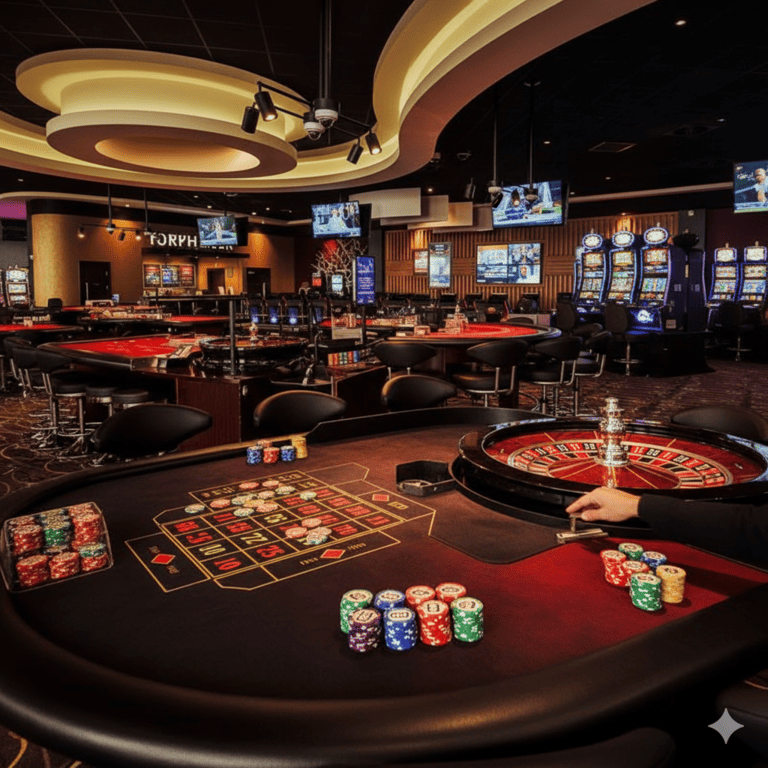
Why does this matter for a casino? Because the atmosphere is part of the product. When you can see the texture of the green felt, the reflection of the studio lights on the gold-plated roulette wheel, and the fine details of the dealer’s attire, you are more engaged. It becomes a premium entertainment experience rather than just a way to place a bet. We have noticed that players who engage with our high-bitrate 5G streams have significantly higher retention rates. They aren’t just playing for the win; they are playing for the spectacle.
8K and the Future of Detail
While 8K devices are still reaching the mainstream, we are already filming our flagship tables in 8K resolution. The reason for this is “digital zoom.” With an 8K source, we can allow the player to zoom in on the cards or the wheel without any loss of clarity. It provides a level of scrutiny that is actually superior to being at a physical table. You can see the microscopic imperfections on the dice or the exact moment the ball loses its momentum. This level of detail is a powerful tool for fairness and player confidence, and it is only possible because of the massive data throughput that 5G affords.
The Mobile-First Revolution: No More Compromises
For a long time, there was a “quality tax” associated with mobile play. If you wanted the best live casino experience, you stayed on your desktop with a wired fiber connection. If you moved to mobile, you accepted lower resolutions and more frequent disconnects. 5G has effectively abolished this tax.
Gaming on the Move
We are seeing a massive shift in player behavior. A significant portion of our live dealer traffic now comes from players who are commuting, sitting in coffee shops, or traveling. In the past, a moving train would mean a dead zone for a live stream. 5G’s superior handoff capabilities-the way it moves your connection from one tower to another-ensure that the stream remains stable even at high speeds.
This portability is a game changer for the “live gambling” sector. It means that the casino is no longer a destination; it is a companion. You can participate in a live baccarat tournament while waiting for your flight at Pearson or Fiumicino, knowing that your connection is as stable as if you were sitting in our studio.
Energy Efficiency and Device Performance
A common complaint with high-def streaming on older networks was that it drained the battery and made the phone run hot. 5G is more efficient in how it handles data bursts. Because the data is delivered so quickly, the device’s radio can spend more time in a low-power state. This means longer sessions for our players and less wear and tear on their hardware. As an operator, this is vital. We want our players to have a comfortable, long-term relationship with our platform, and the technical efficiency of 5G is a silent partner in achieving that goal.
Multi-Camera Innovation and Personalized Directing
In a traditional broadcast, you see what the director wants you to see. In the 5G-powered live casino of 2026, the player is the director.
Choosing Your Perspective
Because 5G can handle multiple high-def streams simultaneously, we can offer “multi-view” tables. A player can have a wide shot of the studio on one part of their screen and a close-up of the dealer’s hands on another. They can switch between five or six different angles with zero delay. This doesn’t just look cool; it provides a sense of agency. The player feels like they are in control of their environment, much as they would be if they were walking around a physical casino floor.
The “Picture-in-Picture” Social Experience
We are also using the extra bandwidth to integrate richer social features. You can now have a high-def video chat with your friends in a private “room” while you all play at the same table. Imagine a “Saturday night out” with friends from three different cities, all visible to each other in a sidebar, all betting on the same spin. 5G makes this complex data-sharing seamless. It turns a solitary digital act into a collective social event.
VR, AR, and the Metaverse Casino
The “holy grail” of iGaming has long been Virtual Reality (VR). Until now, the barrier has been the massive amount of data and the low latency required to prevent motion sickness. 5G is the key that finally unlocks the VR casino.
Immersion Without the Cord
Early VR required a powerful PC and a thick cable. With 5G, we can move the heavy processing to the “edge” of the network and stream the visuals directly to a lightweight, standalone headset. When you put on that headset, you aren’t just looking at a screen; you are inside our casino. You can walk through the lobby, hear the ambient noise of other players, and sit down at a table where the dealer greets you by name.
The latency must be near-zero for this to work. If your head moves but the image lags, you will feel nauseous. 5G’s “Ultra-Reliable Low-Latency Communication” (URLLC) is designed specifically for these types of applications. It ensures that the virtual world reacts to your physical movements instantly, making the experience indistinguishable from reality.
Augmented Reality (AR) at the Kitchen Table
For those who don’t want a full headset, we are developing AR experiences. Using your smartphone or AR glasses, you can “project” a live dealer and a roulette wheel onto your dining room table. You see the real world around you, but the game is integrated into your environment. 5G allows us to stream the complex 3D models and high-def video required to make the dealer look like they are actually standing in your room. This “Mixed Reality” approach is the future of home entertainment, and the live casino industry is at the forefront of its development.
Security, Stability, and Network Slicing
One of the less-discussed but most critical impacts of 5G is the enhanced security and reliability it offers through a technology called “Network Slicing.”
A Dedicated Lane for Gaming
In a crowded environment, like a stadium or a busy city center, 4G networks often become congested. Everyone is trying to use the same pipe, and the quality of your stream suffers. 5G allows for the creation of “virtual slices” of the network. We can work with telecommunications providers to ensure that iGaming traffic is prioritized in a dedicated slice that is optimized for low latency and high reliability.
This means that even in the middle of a crowded urban festival, your live casino session will remain uninterrupted. For our high-value players, this “VIP lane” for data is an incredible benefit. It ensures that their high-stakes decisions are never compromised by a congested network.
Enhanced Mobile Encryption
5G also introduces more robust security protocols at the hardware level. The encryption between the tower and the device is significantly stronger than in previous generations. In an industry where financial security is paramount, this added layer of protection is invaluable. We are able to offer biometric-authorized deposits and withdrawals that are processed over these secure 5G tunnels, providing a level of safety that surpasses many traditional banking systems.
The Economic Impact on Global Gaming Markets
The rollout of 5G is not happening at the same speed everywhere, and this is creating new “power hubs” in the iGaming world.
Bridging the Rural Divide
In countries like Canada and Italy, the rural-urban divide has always been a challenge for digital services. 5G is often easier to deploy in some rural areas than digging thousands of kilometers of fiber-optic cable. As 5G coverage expands into the northern reaches of Canada or the mountainous regions of Italy, we are seeing a surge in new players who previously couldn’t access a stable live dealer stream. This is democratizing high-end gambling, moving it out of the cities and into every home in the country.
Operator Efficiency and Studio Location
5G is also changing how we build our studios. In the past, we had to build our live dealer hubs in cities with massive fiber infrastructure. Now, we have more flexibility. We can set up smaller, “boutique” studios in diverse locations and use 5G as a primary or secondary backhaul for our streams. This allows us to offer more localized content, with dealers who speak specific dialects or who reflect the local culture of our players.
AI and Edge Computing: The Silent Partners of 5G
To truly understand the impact of 5G, you have to look at what’s happening at the “Edge.” Edge computing involves placing servers closer to the user-at the 5G tower itself-rather than in a centralized data center thousands of miles away.
Real-Time Behavioral Analysis
We use AI to monitor our games for fairness and for signs of problem gambling. In the past, there was a delay as data traveled to our central servers and back. With 5G and edge computing, our AI can analyze a player’s behavior in real-time. If the system detects that a player is becoming agitated or is chasing a loss, it can trigger a “wellness check” or a temporary pause in the session instantly. This makes our responsible gambling tools more effective and more responsive than ever before.
Personalized Game Features
Edge computing also allows for “on-the-fly” personalization of the game interface. If the system knows you prefer a specific set of statistics or a certain color scheme, it can render those elements at the edge and push them to your device instantly. This level of hyper-personalization makes every session feel bespoke to the individual player, all without adding any load to the player’s device.
The Social Factor: The Return of the “Casino Community”
One of the biggest criticisms of online gambling was that it was a lonely experience. 5G is helping us bring back the community feel that makes land-based casinos so special.
Seamless Voice and Video Integration
With the massive bandwidth of 5G, we are moving beyond text chat. We are seeing a rise in “Social Tables” where players can use high-def voice and video to interact with each other and the dealer. It’s not just a game anymore; it’s a hangout. You can share a joke, celebrate a win, or discuss a strategy as if you were standing at the rail of a physical table.
Shared Jackpot Celebrations
When someone hits a massive win at one of our tables, 5G allows us to broadcast that celebration across our entire network in real-time. We can show a high-def replay of the win to every player currently logged in, creating a shared moment of excitement. This “network effect” builds a sense of belonging and community that keeps players coming back. They feel like they are part of a club where “everyone wins.”
Challenges and Considerations: The Road Ahead
Of course, the transition to 5G is not without its hurdles. As an operator, we have to manage the “fragmentation” of our player base. Not everyone has a 5G phone yet, and not every area has coverage.
Supporting Legacy Users
We have to build our platforms to be “elastic.” Our software must be able to detect the player’s connection quality and adjust the experience accordingly. If you are on 5G, you get the 4K, multi-camera, VR-ready masterpiece. If you drop down to 4G, the system must seamlessly downgrade the stream to 1080p without interrupting the game. This requires a massive amount of “intelligent” coding in the backend.
Data Consumption Awareness
We also have a responsibility to inform our players about data usage. A 4K live stream can consume several gigabytes of data per hour. While many 5G plans in Canada and Italy are moving toward “unlimited” data, many still have caps. We have integrated data-usage monitors into our app so that players can see exactly how much data they are consuming and can choose to lower the quality if they are nearing their limit.
The Role of 5G in Regulatory Compliance
Regulators are also looking at 5G with interest. The precision of 5G’s geolocation is much higher than that of previous networks.
Geofencing and Legal Boundaries
In markets like Canada, where gambling laws are province-specific, we have to ensure that a player in Ontario is actually in Ontario. 5G’s “beamforming” and dense tower network allow us to verify a player’s location within a few meters. This level of “hard geofencing” is a dream for regulators and helps us stay compliant with the strictest provincial laws. It prevents “grey market” activity and ensures that tax revenue stays where it belongs.
Real-Time Auditing
We are also exploring “live auditing” where regulators can have a dedicated, low-latency stream of our RNG data and studio feeds. This allows them to perform “spot checks” in real-time, further increasing the transparency and integrity of the industry. 5G provides the “pipe” that makes this level of oversight possible.
Conclusion: The Horizon of a New Era
As I look at the data and the feedback from our players in 2026, the conclusion is clear: 5G is the single most important infrastructure development in the history of the online casino. It has moved us from the era of “simulated” gambling to the era of “virtual reality” gambling.
We are no longer limited by the speed of the air or the capacity of the cable. We are limited only by our imagination. The impact of 5G on live gambling has been to remove the “online” from “online casino.” It is now just “the casino,” accessible anywhere, anytime, with a quality that is indistinguishable from the real thing.
Whether you are seeking the cinematic thrill of a 4K roulette wheel, the social buzz of a video-enabled blackjack table, or the total immersion of a VR suite, 5G is the engine that makes it all possible. We are proud to be at the forefront of this revolution, and we invite you to take your seat at the table. The future is here, it’s lightning-fast, and it’s waiting for you to make your move.
Thank you for being part of this journey with us. We will continue to push the boundaries of what is possible, ensuring that every spin, every deal, and every bet you place is supported by the best technology the world has to offer. The game has changed, and the advantage is now firmly in your hands.